
Want to know how to increase social media engagement that boosts your brand?
To truly boost your social media engagement, you have to create content that starts a conversation, not just collects a few likes. The secret is to stop broadcasting your message and start building a real community. This happens through authentic interactions, content that actually helps people, and being proactive in how you communicate.
Your Playbook for Authentic Social Media Engagement

It’s time to get off the hamster wheel of just posting content and hoping for the best. Real success on social media isn’t about vanity metrics like how many followers you have. It’s about forging genuine connections that create brand loyalty and lead to real business results.
This guide is your step-by-step playbook for moving beyond just passively dropping content into the void. We’re going to cover everything from defining your goals to creating content for specific platforms that your audience will actually care about. You’ll see how to plan your content, use different creative formats, and manage your community like a pro. The end goal? To turn your social channels from a ghost town into a lively, interactive hub.
The Big Shift to Conversational Platforms
The way people use social media has changed. It’s not just for mindlessly scrolling anymore—it’s now a major place for discovery and direct conversations with brands. Engagement skyrockets when you meet people where they’re already looking for products and connecting with creators.
Since the end of 2021, there’s been a massive 71% jump in people using TikTok to research brands. We’ve seen a 31% increase in the same behavior on Snapchat. At the same time, direct messaging on these platforms has blown up, which shows a clear preference for one-on-one chats. This trend makes it crystal clear: just posting to your feed isn’t going to cut it anymore. For more on this, the data over at GWI.com is eye-opening.
Key Takeaway: Modern engagement means joining the conversation, not just shouting into the wind. Your audience wants to feel seen and heard, which means you need to be more interactive and responsive.
This fundamental change requires a whole new way of looking at your social media strategy. It’s about prioritizing community management, actually listening to feedback, and making content that’s designed to get a response.
Before you can create engaging content, you need to understand the big picture. Having a strong digital presence is a critical piece of your business goals and directly shapes how customers see you. To get a better handle on how all the pieces fit together, take a look at our guide on developing a cohesive brand strategy.
At the end of the day, learning how to increase social media engagement is about learning how to be human online. It’s about being consistent, providing real value, and treating your followers like partners in a conversation—not just names on a list. Let’s get you the tools to do exactly that.
Laying the Groundwork: Goals and Audience
Jumping onto social media without a clear strategy is like setting sail without a map. You might feel busy, but you’re not really going anywhere. To get real, measurable results from your social media efforts, you have to start by defining what success actually looks like and who you’re trying to talk to.
Every single like, comment, and share needs to serve a bigger purpose—one that’s tied directly to your core business objectives. Are you looking to build brand awareness? Generate more qualified leads? Or maybe you want to provide stellar customer support. Your answer changes everything. Vague goals like “get more followers” are a waste of time; you need specific, measurable targets.
Set Goals That Actually Matter
The best social media goals are SMART goals: Specific, Measurable, Achievable, Relevant, and Time-bound. This simple framework is a game-changer, turning fuzzy wishes into a concrete action plan. Instead of saying you want to “increase engagement,” a SMART goal sounds more like, “Increase our average Instagram post engagement rate by 2% over the next quarter by focusing on interactive Stories and Reels.”
See the difference? Here’s how this might look for different business needs:
- For Brand Awareness: Your goal could be to “Increase our organic reach on LinkedIn by 15% in the next 60 days.” Your main KPI (key performance indicator) here is Reach.
- For Lead Generation: A much stronger goal is to “Drive 50 qualified leads per month from our Facebook content to our new e-book landing page.” In this case, your most important KPI is the Conversion Rate from your social media clicks.
- For Customer Support: You might aim to “Reduce our average response time to customer DMs on X (formerly Twitter) to under 2 hours within one month.” Here, the KPI you’re laser-focused on is Response Time.
Having this kind of clarity means every piece of content you create has a specific job to do. It stops you from just posting for the sake of it and channels your energy into activities that move the needle.
Get to Know Who You’re Talking To
Once you know what you want to achieve, you need to know who you’re trying to reach. Guessing is the fastest way to create generic content that no one pays attention to. You have to go deeper than basic demographics to understand what makes your audience tick—their motivations, their biggest problems, and where they spend their time online.
This is where creating detailed user personas is incredibly valuable. A persona is basically a semi-fictional character profile of your ideal customer, built using real data and research. Think of it as your cheat sheet for crafting content that truly hits home.
Pro Tip: Don’t just make up personas out of thin air. Ground them in reality by digging into the analytics you already have. Tools like Instagram Insights, Facebook Audience Insights, and LinkedIn Analytics are absolute gold mines of information.
Take a look at your existing data. Who are your most engaged followers? Note their age, location, and gender. But more importantly, figure out what time of day they are most active. That simple piece of information alone can give your engagement a huge boost, just by making sure you post when they’re actually online and ready to interact.
Figure Out What Your Audience Really Wants
Analytics tell you the “who” and “when,” but to create content that people can’t ignore, you have to nail the “why.” Why should they stop scrolling and pay attention to you? The best way to find out is to listen to them and, well, ask.
Here are a few practical ways to get these crucial insights:
- Run Polls and Q&As: Use interactive features like Instagram Stories polls or LinkedIn polls to ask them directly. Ask about their biggest challenges, what they want to learn more about, or which types of content they like best.
- Dig Through the Comments: Don’t just scan the comments on your own posts—go read the ones on your competitors’ posts, too. What questions keep popping up? What are people complaining about? These are free content ideas, served up on a silver platter.
- Use Social Listening: Keep an eye on keywords and hashtags related to your industry. This helps you tap into the larger conversation and spot the trending topics your audience is already buzzing about.
When you combine the hard numbers from your analytics with the human insights you get from actually engaging, you build a crystal-clear picture of your audience. This data-driven approach is the foundation for creating content that doesn’t just get seen—it gets a response.
Develop a Platform-Specific Content Strategy
If you’re using the same exact post across all your social media channels, you’re missing a huge opportunity. Think of it this way: you wouldn’t talk to your colleagues on LinkedIn the same way you’d chat with friends on Instagram. Each platform has its own vibe, its own audience, and its own rules for what works.
A one-size-fits-all strategy is a recipe for low engagement. To really connect with people, you have to meet them where they are and speak their language. What gets tons of likes and shares on Facebook might completely flop on TikTok. The secret is adapting your core message to fit the unique environment of each network.
Match Your Content to the Platform’s Strengths
Every social media platform has its own personality. Instead of fighting it, learn to work with it. Leaning into what makes each channel unique is the first step toward creating content that people actually want to see.
- LinkedIn: This is your professional hub. People are here for industry news, career growth, and B2B connections. Focus on thought leadership, deep dives into company news, and insightful advice. Text-heavy posts, detailed carousels that explain complex ideas, and polished videos work wonders here.
- Instagram: It’s all about visuals. Instagram is driven by stunning photos, creative Reels, and personal stories. Use high-quality imagery and video to build a community. Interactive Stories using polls and Q&As are also fantastic for sparking engagement.
- TikTok: Keep it short, fun, and authentic. This platform is all about entertainment. Users want quick, vertical videos that are relatable and often tap into the latest trends. Don’t overproduce it—raw, genuine content almost always performs better.
- Facebook: With its massive and diverse audience, Facebook is perfect for building community, especially in Groups. It’s a great spot to share company updates, customer testimonials, and event details. Live video is huge here, as are posts designed to get a conversation going in the comments.
To do this effectively, you first need to know who you’re talking to. That’s where solid audience research comes in.
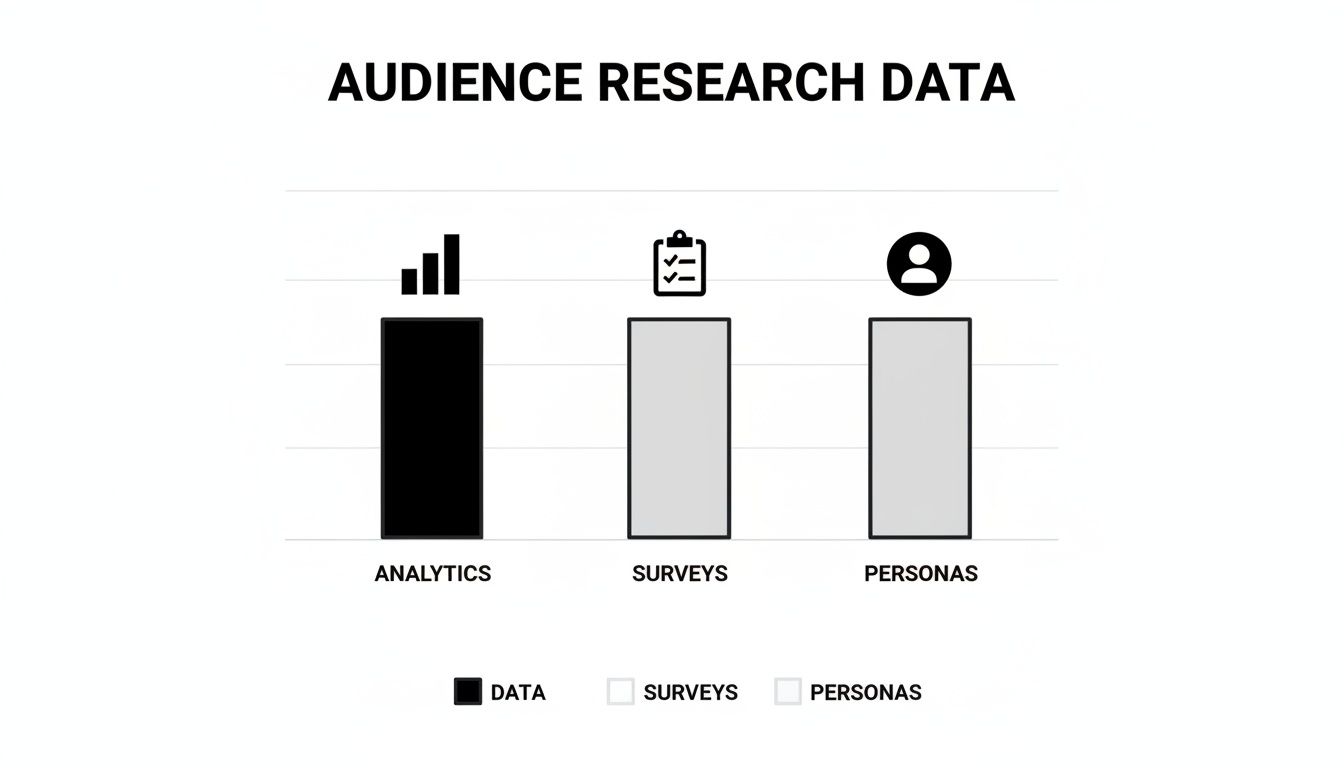
This chart shows how combining hard data from your analytics with real feedback from surveys and well-developed customer personas gives you the full picture.
Use Data to Choose the Right Content Formats
Stop guessing what might work and let the numbers tell you what is working. Each platform has clear winners when it comes to content formats, and focusing your efforts there will give you the biggest bang for your buck.
The performance gap between formats can be huge. For instance, 2025 data shows that while TikTok’s average organic engagement is around 2.5%, it can shoot up to 7.5% for smaller accounts—proving vertical video is a must. Meanwhile, multi-image posts on LinkedIn can pull in 6.6% engagement, while the typical Facebook page is lucky to hit 0.07%.
The table below breaks down which formats are currently crushing it on the major platforms.
Platform-Specific Content Performance Snapshot
| Platform | Top Performing Format | Average Engagement Rate |
|---|---|---|
| Reels | 1.95% | |
| TikTok | Vertical Video | 2.5% – 7.5% |
| Live Video / Reels | 0.15% | |
| Carousels / Documents | 6.6% |
This data makes it obvious: choosing the right format for the platform isn’t just a “best practice,” it’s the most reliable way to boost your engagement. A brilliant idea in the wrong package is a wasted opportunity.
Define Your Content Pillars and Mix
To keep your feed interesting and on-brand, you need content pillars. These are the 3 to 5 core themes you’ll consistently talk about. For a fitness studio, these pillars could be Workout Tutorials, Nutrition Tips, Member Spotlights, and Motivational Mindset.
With your pillars in place, create a balanced content mix. A great guideline is the 80/20 rule: 80% of your posts should offer value by educating, entertaining, or inspiring your audience. The other 20% can be promotional.
This approach builds trust and keeps your followers from tuning out. When they know you consistently provide great content, they’ll be far more open to your sales messages when they appear. For a deeper dive, check out these excellent strategies for creating engaging social media content.
Map It All Out With a Content Calendar
A content calendar is your best friend for staying consistent. It helps you plan your posts in advance, ensures you’re hitting all your content pillars, and keeps your 80/20 mix in check. You don’t need fancy software; a simple spreadsheet will do the trick.
Make sure your calendar includes these key details:
- Date & Time: When the post is scheduled to go live.
- Platform: Which channel(s) it’s for.
- Content Pillar: Which of your core themes it supports.
- Format: Reel, Story, carousel, text post, etc.
- Copy & Visuals: The actual text and the image or video file.
- Status: A simple tracker like “Drafting,” “Approved,” or “Published.”
Planning even just a couple of weeks ahead can dramatically reduce your stress levels and free you up to handle real-time comments, messages, and community interaction. A well-planned content strategy is a core part of any successful social media marketing effort.
Mastering Proactive Community Management

Real engagement isn’t a one-way broadcast where you just monologue at your audience. If you’re just posting content and waiting for comments to magically appear, you’re leaving a massive opportunity on the table. The real secret to boosting social media engagement is getting your hands dirty with proactive community management. It’s all about jumping into conversations and making sure your audience feels seen and heard.
This requires a mental shift—stop thinking like a publisher and start acting like a participant. When you actively engage, you’re not just racking up followers; you’re building a loyal community that feels a real, human connection to your brand.
Respond with Speed and Authenticity
Let’s start with the first rule of community management: be responsive. When someone takes a minute out of their day to comment or send a DM, they’re reaching out for a connection. You have to acknowledge that signal quickly and authentically if you want to build any kind of trust.
Prompt replies have been shown to seriously boost customer loyalty. But speed isn’t everything; your responses need to feel like they came from a person, not a robot. Ditch the generic, canned answers. Instead, use their name, mention something specific from their comment, and write in a conversational tone that fits your brand. This simple act can turn a basic interaction into a positive, memorable experience.
Key Insight: Every comment, DM, and mention is an opportunity. Responding quickly and with personality shows you value your audience’s time and input, which encourages them to keep interacting with your content in the future.
This is especially critical when it comes to customer service issues. A negative comment handled with genuine empathy and a swift resolution can actually create a more loyal customer than someone who never had a problem in the first time.
Go Beyond Your Own Feed
Just replying to comments on your own posts is the bare minimum. That’s reactive. True proactive management means you’re actively seeking out and joining relevant conversations happening elsewhere. This is where you’ll discover new followers, build up your authority, and show off your brand’s expertise.
This practice, often called social listening, is one of the most powerful ways to grow your presence. Instead of waiting for people to find you, you go directly to them. It’s about becoming a valuable member of the wider industry community, not just the ruler of your own little island.
Actionable Social Listening Tactics
So, where do you find these conversations? It’s easier than it sounds. Here are a few practical ways to start finding and joining relevant discussions today:
- Monitor Keywords and Hashtags: Set up alerts for terms related to your industry, your products, and common customer pain points. When you spot someone asking a question you can answer, jump in with helpful advice—no sales pitch needed.
- Engage with Industry Partners: Follow and interact with complementary businesses, influencers, and experts in your niche. Leaving thoughtful comments on their posts gets your brand in front of their highly relevant audience.
- Participate in Relevant Groups: Join Facebook Groups or LinkedIn Groups where your ideal customers are already hanging out. Contribute valuable insights, answer questions, and focus on building relationships before you even think about pitching.
Imagine a local coffee shop monitoring hashtags like #BestCoffeeInTown or keywords like “looking for good espresso.” When they find a post, a friendly reply with a helpful suggestion or a warm invitation can create an immediate, personal connection.
Of course, maximizing your impact often means getting platform-specific. For example, to really get traction on TikTok, it’s worth digging into guides that offer proven strategies to increase TikTok video views.
Create Simple Workflows and Scripts
Managing all these conversations can feel like a lot, especially as your brand grows. This is where having simple workflows and a few response scripts can be a lifesaver. The goal isn’t to sound robotic—it’s to be efficient and consistent.
Put together a simple document with pre-written but customizable responses for common scenarios.
Example Response Templates:
| Situation | Template Starter |
|---|---|
| Positive Feedback | “We’re so glad you enjoyed it, [Name]! What was your favorite part?” |
| Negative Feedback | “Hi [Name], we’re sorry to hear you had this experience. Can you send us a DM so we can make this right?” |
| Common Question | “That’s a great question, [Name]! The best way to [achieve result] is to…” |
These scripts give your team a solid starting point that can easily be personalized. By mastering proactive community management, you turn your social media channels from a simple marketing tool into a powerful engine for building relationships, loyalty, and brand advocacy.
Creating Synergy Between Paid and Organic Efforts
Relying just on organic social media in today’s pay-to-play environment is like trying to shout in a crowded stadium—your voice simply won’t carry far enough. The brands that really break through don’t see organic and paid efforts as separate channels. Instead, they build a powerful feedback loop where each one fuels the other.
This synergy is what separates businesses with stagnant growth from those seeing explosive results. Your organic content is the perfect testing ground to see what resonates. Then, paid amplification takes those proven winners and puts them in front of thousands of your ideal customers.
Let Organic Performance Guide Your Ad Spend
Stop guessing what will make a good ad. Your audience is already telling you what works every single day through their likes, comments, shares, and saves. The organic posts that are getting the most love are the perfect foundation for high-converting ad campaigns. Why? Because they’ve already been validated by the very people you want to reach.
This approach takes the risk out of your ad spend and dramatically increases your chances of seeing a great return. It’s a simple, data-driven way to make sure your budget is spent on creative that has already proven it can grab attention and drive action.
Here’s how you can put this into practice:
- Pinpoint Your Winners: Regularly check your analytics to find posts with the highest engagement rates—don’t just focus on likes. Look for content that sparked real conversations in the comments or earned a ton of saves.
- Understand the “Why”: Before you just “boost” a post, dig into why it performed so well. Was it the hook in the first line? The relatable video format? The specific pain point you addressed?
- Amplify with a Clear Goal: Turn that successful organic post into an ad with a specific objective. If a post drove a lot of link clicks, build a traffic ad around it. If it got great comments, use it for an engagement or brand awareness campaign.
Key Takeaway: Think of your organic feed as your creative lab. You get to test ideas, formats, and messages for free. Once you find what works, you put your ad budget behind the content that has already earned your audience’s approval.
This smart allocation of resources is critical. Paid and organic tactics are a powerful duo, a fact backed by social media’s rise as the world’s top advertising channel. With social ad spend projected to blow past $247 billion by 2024-2025, even a small improvement in ad performance can lead to massive gains. You can explore more about these powerful social media marketing statistics on sprinklr.com.
Build Smarter Audiences from Your Engaged Followers
One of the biggest perks of having a strong organic presence is the audience data it generates. You can use this data to build incredibly targeted audiences for your paid campaigns, making sure your ads are shown to people who are much more likely to convert.
Don’t just target cold audiences based on broad interests. Instead, create high-intent audiences made up of people who already know and like you.
Two Powerful Audience Types to Build:
- Custom Audiences: This is a list of users who have recently engaged with your social profiles, watched your videos, or visited your website. These people are already warm leads, making them prime candidates for ads that ask for a sale or sign-up.
- Lookalike Audiences: Once you have a solid custom audience, you can ask the ad platform to find new people who share similar traits. This is one of the most effective ways to find qualified prospects at scale.
This is where the magic really happens. You use engaging organic content to attract the right people, then use paid ads to find thousands more just like them. For any business looking to scale, getting a handle on audience creation is a must, especially when diving into Facebook advertising where these tools are incredibly powerful.
When you combine your organic community-building with smart, targeted ad spend, you create a growth engine that consistently delivers results.
How to Measure and Optimize Your Engagement Strategy
You can’t improve what you don’t measure. The final—and most critical—piece of any powerful engagement strategy is a continuous loop of analysis and tweaking. Without data, you’re just guessing what your audience wants, which is a surefire way to waste time, effort, and money.
To truly understand what’s working, you have to move beyond vanity metrics like follower count. Instead, the real goal is to focus on key performance indicators (KPIs) that directly connect your social media efforts to actual business results. This is how you prove your strategy is delivering real value.
Tracking the Metrics That Actually Matter
Your number one goal should be calculating your engagement rate. This simple percentage measures how many people interacted with your content compared to how many people saw it. It’s the truest indicator of whether your content is actually resonating.
While the exact formula can vary a bit from platform to platform, the basic idea is always the same.
Here are the core metrics you should have on your radar:
- Engagement Rate: This is your north star. To get it, just divide your total engagements (likes, comments, shares, saves) by your reach or impressions, then multiply by 100.
- Reach and Impressions: Reach tells you how many unique people saw your content. Impressions tell you the total number of times it was seen. If you have high reach but low engagement, it’s a major red flag that your content isn’t compelling enough.
- Click-Through Rate (CTR): This one’s simple: how many people clicked a link in your post? It’s a vital metric for any campaign trying to drive traffic to your website.
- Conversion Rate: This tracks how many people took a specific action after clicking your link, like signing up for a newsletter or making a purchase. It’s the metric that ties social media activity directly to business goals.
A good benchmark for engagement rate across most platforms is somewhere between 1.4% and 2.8%. If you’re consistently hitting or beating this range, your content strategy is on the right track. If not, it’s a clear signal that it’s time to adjust your approach.
Using Analytics Tools to Find Insights
The good news? You don’t need to track all of this with a manual spreadsheet. Every social media platform has its own built-in analytics dashboard, like Meta Business Suite for Facebook and Instagram or LinkedIn Analytics. These tools are packed with data on your audience, their peak activity times, and which posts are performing best.
For a more streamlined view, third-party tools like Hootsuite or Sprout Social can pull all your data into one place. This makes it much easier to compare performance across different channels and spot the trends that matter.
A Framework for Continuous Improvement
Data is useless if you don’t do anything with it. The final step is creating a simple, repeatable process for reviewing your performance and optimizing your strategy. For most businesses, a monthly or quarterly review is a great rhythm to get into.
During your review, ask yourself these key questions:
- Which content formats drove the highest engagement rate? (e.g., Reels, carousels, text-only posts)
- Which topics or content pillars sparked the most conversation?
- What time of day did our most successful posts go live?
- Are we actually meeting the KPI goals we set for ourselves?
Use the answers to double down on what works and stop doing what doesn’t. This cycle of measuring, analyzing, and optimizing is how you build a social media presence that consistently drives more and more engagement over time.
Still Have Questions About Social Media Engagement?
If you’re wondering about the nitty-gritty of social media engagement, you’re not alone. We get these questions all the time from businesses trying to find their footing and grow a real community online. Let’s clear up a few common ones.
What’s a Good Engagement Rate, Anyway?
This is the million-dollar question, isn’t it? A solid target to aim for on most social platforms is anywhere between 1.4% and 2.8%.
Of course, this can shift depending on your industry and which platform you’re on. But if you’re consistently hitting that sweet spot, you know your content is resonating. If your numbers are dipping below that, it’s a good sign that it’s time to take a closer look at your strategy.
Which Social Media Platform Has the Best Engagement?
If we’re just talking pure numbers, TikTok often blows everyone else out of the water. Its algorithm is an absolute powerhouse for making short-form video go viral.
But here’s the thing: the “best” platform is wherever your specific audience hangs out. If you’re a B2B company, for instance, you’ll find much more valuable and meaningful engagement over on LinkedIn through professional discussions and industry insights. It’s all about context.
Is It Better to Have More Followers or More Engagement?
Engagement. Every single time. It’s not even a contest.
Think about it—what good is a massive follower count if your posts are met with silence? High engagement is a signal to the social media algorithms that people find your content genuinely valuable. That, in turn, gets you pushed out to even more new audiences. A small, fired-up community will always drive better business results than a huge, passive crowd.
Ready to stop guessing and start building a social media presence that actually generates leads? The team at SWAT Marketing Solutions creates data-backed strategies that attract, engage, and convert your ideal customers.